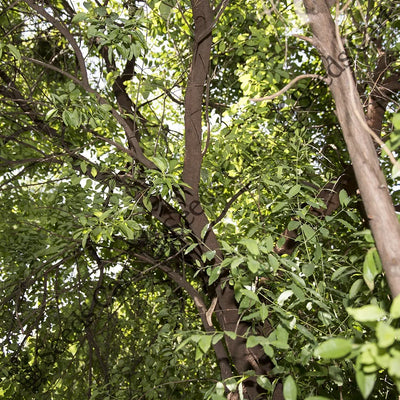
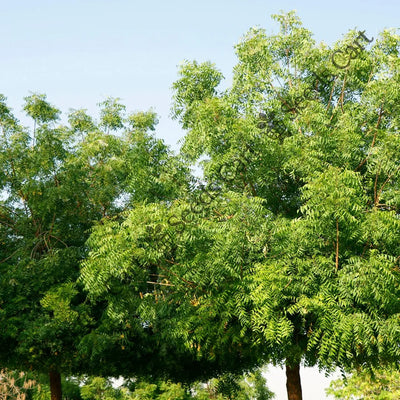
Terminalia catappa Seeds (Indian Almond tree)
Terminalia catappa (Indian Almond tree) is a multipurpose tree species sourced from Indian natural stands, suited for reforestation, agroforestry, and social forestry.
| Botanical Synonyms | Terminalia cattapa |
| Common Names | Indian Almond tree |
| Plant Form | Multipurpose Tree |
| Seed Collection | June-July |
| Seed Longevity | 1-2 year |
| Seeds per Kg (approx.) | 176 |
| Germination Rate | 25% |
| Seed Treatment | soaked in water for 24 hours. |
Growing & Establishment
Tree seeds vary widely in their germination requirements. Many Indian hardwood species benefit from pre-sowing treatment — soaking for 12–24 hours, mechanical scarification, or brief hot water treatment to break seed coat dormancy. Polybag nursery raising is the standard method for most plantation species in India. Field transplanting is best timed to coincide with the onset of the monsoon for maximum survival.
Use in India
India's National Afforestation Programme, state forest departments, and private agroforestry initiatives use millions of tree seedlings annually for reforestation, social forestry, and watershed restoration. Native tree species are preferred for ecological projects, carbon sequestration, and farm forestry under national agroforestry schemes.
SeedsCart has supplied tree seeds to nurseries, forest departments, NGOs, plantation companies, and agroforestry projects across India for over 30 years. Seeds are collected from certified natural stands, germination-tested before dispatch, and available in bulk quantities for institutional and commercial buyers. We ship internationally.
Product Specifications
| Name | Terminalia catappa Seeds (Indian Almond tree) |
|---|---|
| Category | Tree Seeds |
| Country of Origin | India |
| Net Quantity | 100g / 250g / 500g / 1kg (as per variant selected) |
| Marketed by | Ebbora Agritech Pvt. Ltd., 47 Panditwari, P.O. Premnagar, Dehradun - 248001, Uttarakhand |
| Manufactured by | Ebbora Agritech Pvt. Ltd., 47 Panditwari, P.O. Premnagar, Dehradun - 248001, Uttarakhand |
| MRP | 399.00 (Incl. of all taxes) |
| Customer Support | Email: support@seedscart.in Call: '+91-7455025717 |
Germination Guide
Pre-Treatment
Pre-Germination Prep
Sowing
Post-Care & Growing On
Tips
- The hard husk is the main barrier to germination — soaking or partial husk removal both help Sow generously; germination rates are moderate even with good pre-treatment This species tolerates sandy, saline-adjacent soils well, making it a good coastal planting choice